
A tire blows out on the highway doing 100 kilometers an hour. The car pulls hard to one side. The driver’s hands are shaking before they even get the wheel straightened out.
That’s the moment a lot of people picture when they think about a blowout. It’s loud, it’s sudden, and it feels like the car just quit on you. Most of the time, the tire quit long before that moment. It just picked the worst possible time to show it.
This guide walks through what actually happens during a blowout, how a professional flat tire service steps in to fix it safely, and what you should know before you’re the one pulled over on the shoulder.
What Is Professional Flat Tire Service?
A professional flat tire service is a roadside crew that comes to your car, assesses the tire and wheel, and either repairs, replaces, or arranges a tow, all on the spot. It’s built for the moment you can’t drive to a shop yourself.
This isn’t the same as a scheduled tire shop visit. Shops fix tires when you bring the car in on your own time. Roadside crews come to you, often on a highway shoulder, in a parking lot, or in your driveway at midnight.
Most calls fall into one of two buckets. Either the tire can be swapped for a spare and you’re back on the road, or the damage is bad enough that the vehicle needs to be towed. A trained technician makes that call within a few minutes of arriving.
What Actually Causes a Tire Blowout?
A blowout is different from a slow leak. It’s a sudden failure, usually tied to heat buildup inside an underinflated tire, a cut or puncture in the sidewall, or a tire that’s simply too worn to hold up under load.
Here are the most common triggers:
- Low tire pressure. An underinflated tire flexes more with every rotation. That flexing generates heat, and heat breaks down the rubber from the inside out.
- Sidewall damage. Hitting a curb, a pothole, or road debris can weaken the sidewall without leaving a visible mark right away.
- Old or worn tread. Tires lose flexibility as they age, even if the tread looks fine. Most manufacturers recommend replacing tires by six years regardless of mileage.
- Overloading the vehicle. Every tire has a weight rating. Loading a vehicle past that rating puts extra stress on tires that are already working hard.
- Extreme heat. Summer asphalt can push tire temperatures well past what the rubber was built to handle, especially on long highway drives.
A driver in Cambridge once told a roadside crew he’d been meaning to check his tire pressure for two weeks. The blowout happened on a Friday commute, in the fast lane, in the rain. That two-week delay is a common thread in a lot of these calls.
How Professional Flat Tire Service Handles a Blowout, Step by Step
Handling a blowout safely isn’t just about changing a tire. It’s about managing the scene so nobody gets hurt while it happens. Here’s the general process a trained crew follows.
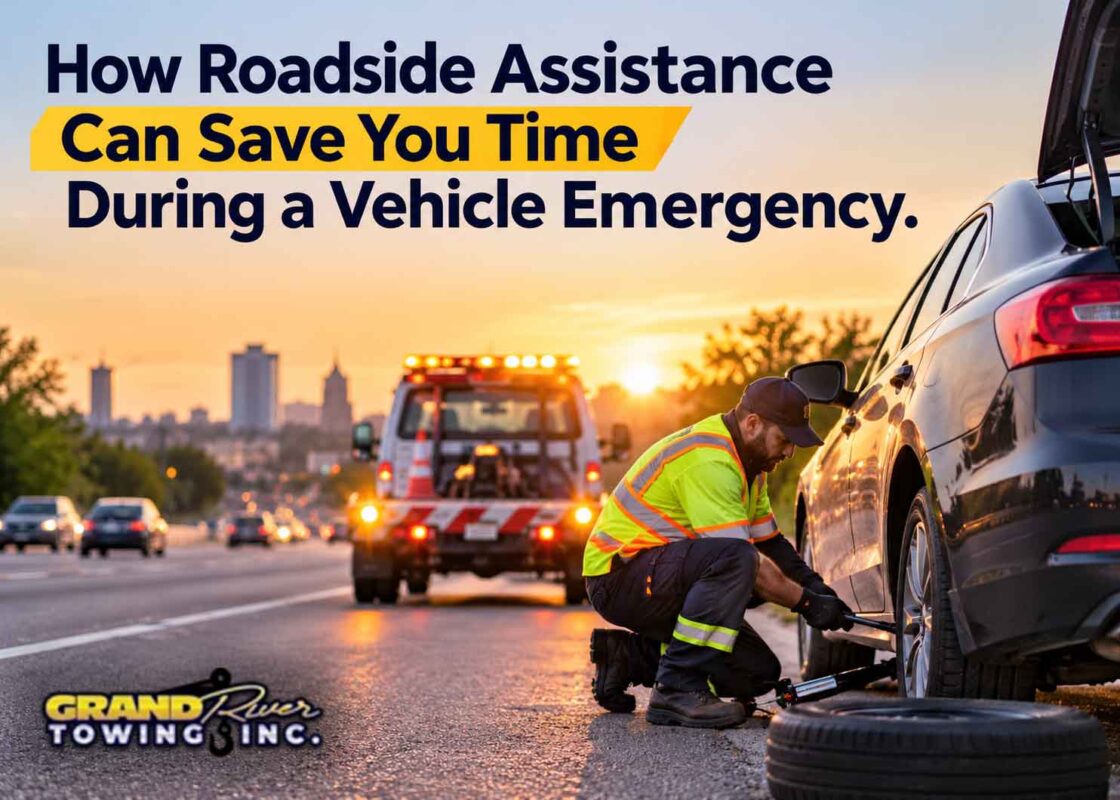
- Assess the location first. Before touching anything, the technician checks where the vehicle is sitting relative to traffic. A car half on the shoulder gets moved, if it’s safe to do so, before any work starts.
- Set up visibility. Cones, flares, or hazard lights go out to warn approaching traffic. This step matters more than people expect. A stopped vehicle on a shoulder is one of the more dangerous places to be on any road.
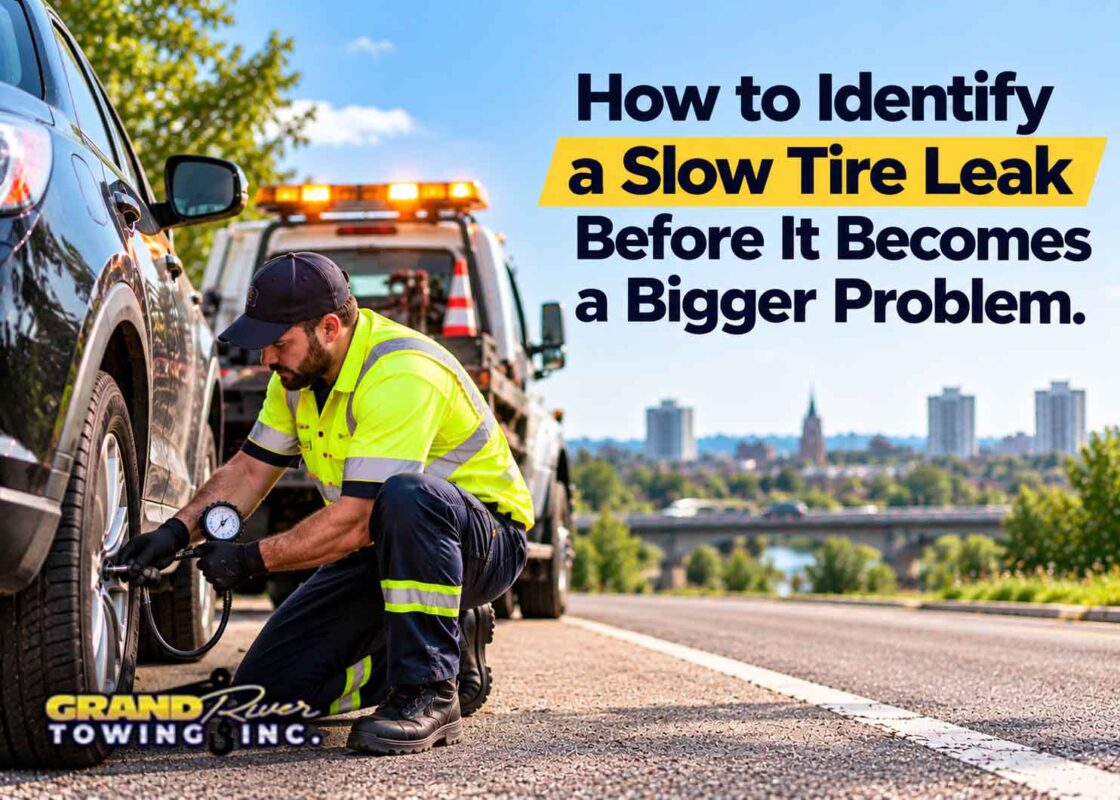
- Inspect the tire and wheel. The technician checks whether the damage is isolated to the tire or if the rim, suspension, or brake line took damage too. A blowout at highway speed can bend a rim without it being obvious at first glance.
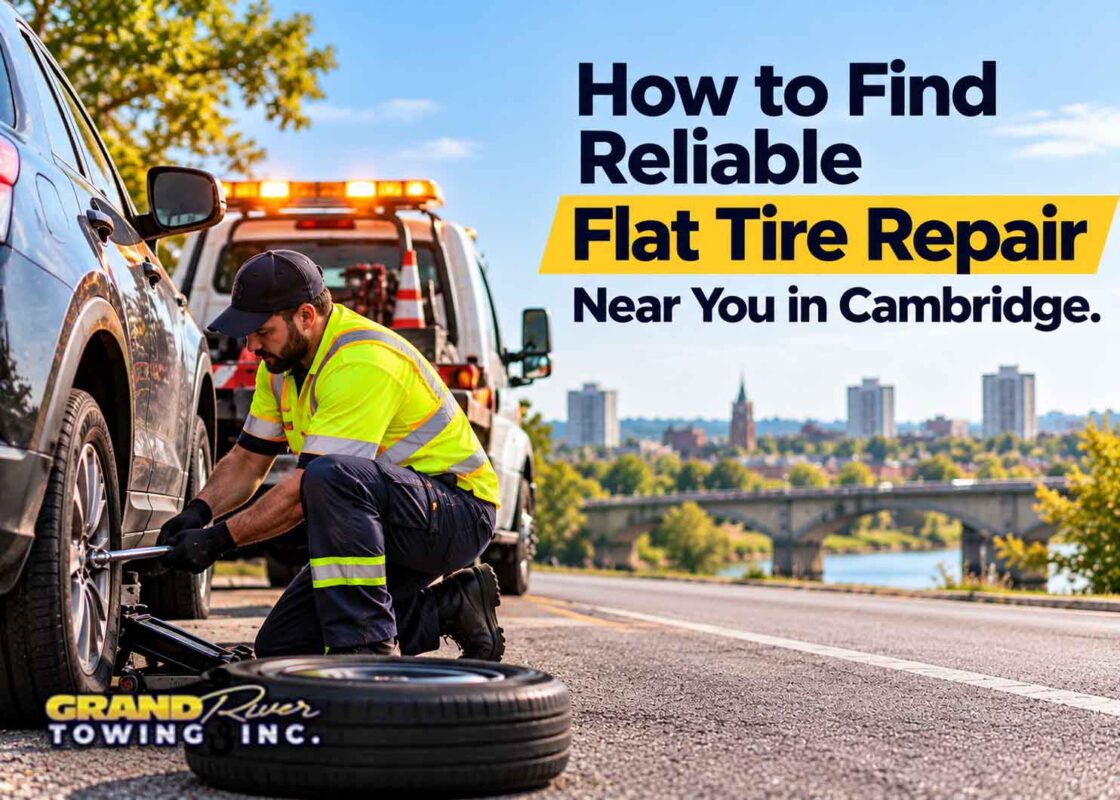
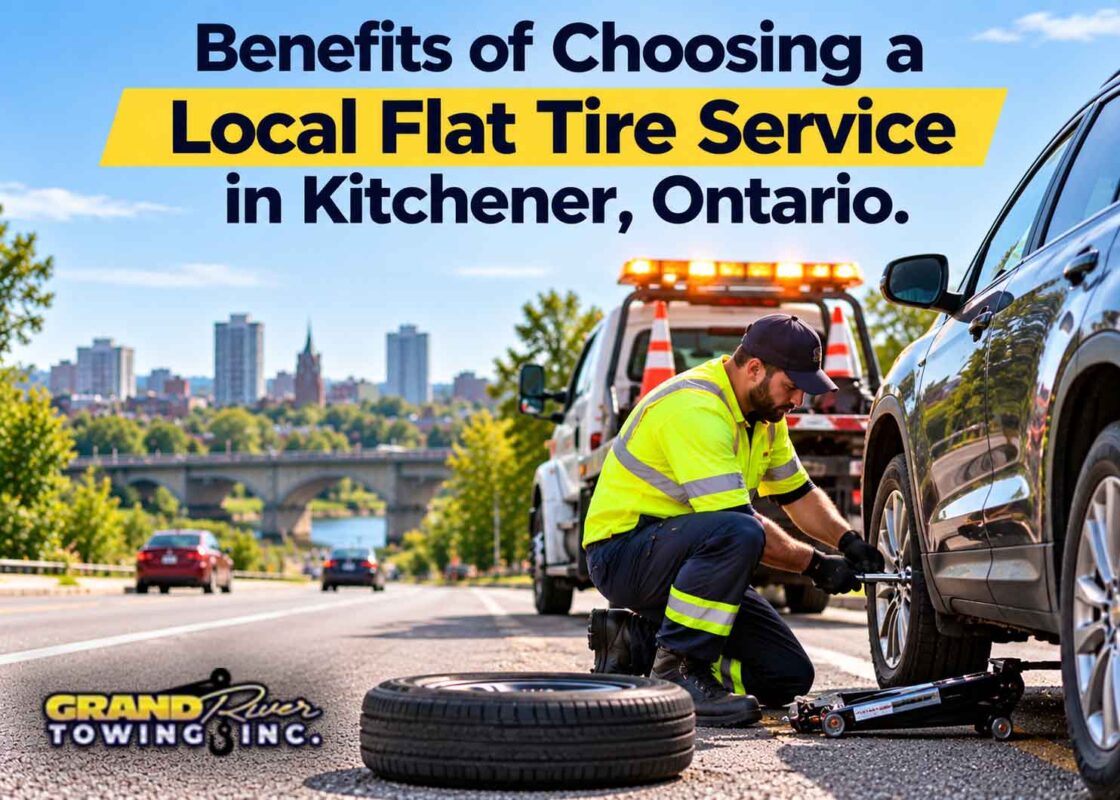
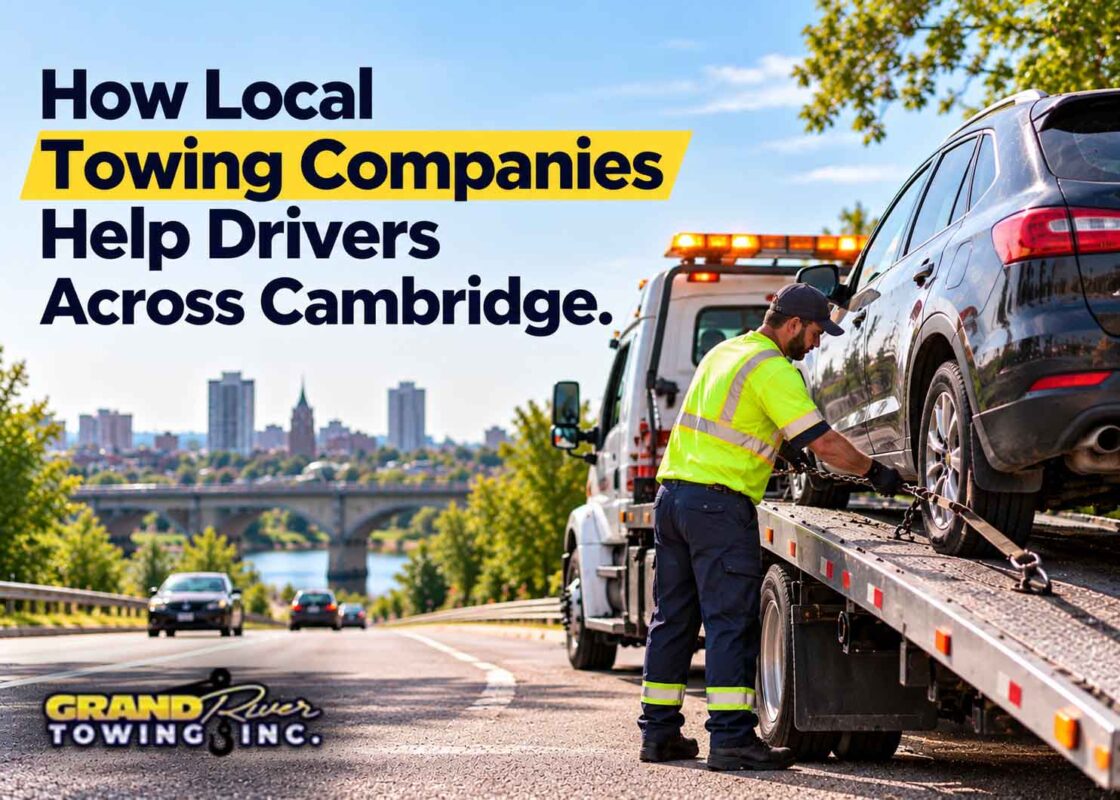
- Decide between repair, replacement, or towing. If there’s a usable spare and no other damage, a swap happens on the spot. If the spare is missing, flat, or the damage runs deeper, the vehicle gets towed to a shop instead of risking a drive on a compromised tire.
- Torque the wheel properly. Lug nuts get tightened to the manufacturer’s spec, not just snugged by hand. An improperly torqued wheel can work loose within a few kilometers.
- Confirm the vehicle is roadworthy. A final check on tire pressure, wheel alignment by feel, and any warning lights before the driver heads off.
This is where a proper emergency tire blowout service earns its keep. Anyone can loosen a lug nut. Doing it safely on the shoulder of a highway with cars passing at speed is a different job entirely.
DIY Tire Change vs. Calling for Help
Changing a tire yourself isn’t complicated in a driveway with good lighting and no traffic. It’s a different story on a highway shoulder, in the dark, or in bad weather.
Here’s how the two compare:
| Factor | DIY Tire Change | Calling a Professional |
| Safety on a busy road | Higher risk, no warning setup | Cones, flares, and trained positioning |
| Time to get moving | Depends on skill and tools | Usually under 30 minutes |
| Handling rim or brake damage | Easy to miss | Checked as part of the job |
| Weather and lighting | Fully exposed | Crew brings proper equipment |
| Spare tire issues | Stuck if spare is bad | Towing arranged on the spot |
If you’re in a parking lot with a spare in good shape, doing it yourself is a reasonable option. If you’re on a shoulder with traffic moving fast, calling a roadside tire service is the safer call every time.
What to Look for When Choosing a Flat Tire Repair Service
Not every towing company handles tires the same way. A few things separate a solid flat tire repair service from one that’s just going to bolt on your spare and leave.
- 24/7 availability. Blowouts don’t wait for business hours. A service that only answers during the day isn’t much help at 2 a.m.
- Real response time estimates. A dispatcher who gives you a realistic window, not a vague “soon,” tells you they actually track their trucks.
- Trained technicians, not just drivers. Someone who can spot rim damage or a bent control arm saves you from driving off on a car that isn’t actually safe.
- Clear pricing before the truck arrives. You should know roughly what a call costs before the technician shows up, not after.
- Coverage for your specific vehicle. Trucks, larger SUVs, and dual-wheel setups sometimes need different equipment than a standard sedan tire swap.
How Much Does Roadside Tire Service Cost?
Pricing depends on a few things: time of day, distance from the dispatch point, whether it’s a simple swap or a tow, and the type of vehicle involved.
A straightforward tire swap with your own spare tends to sit on the lower end of the pricing scale. A tow to a shop, especially overnight or during peak traffic, costs more because it ties up a truck and driver for longer.
Ask for a rough quote when you call. A company confident in its pricing will give you a range on the phone rather than making you wait for the invoice.
FAQ
Can you drive on a blown tire to get to a gas station?
No. Driving on a blown tire, even a short distance, usually destroys the wheel and can damage the suspension. Pull over as soon as it’s safe and call for help instead.
How fast can someone actually get to me after I call?
It depends on your location and current call volume, but most professional flat tire service providers aim for 30 to 45 minutes in urban areas. Rural or highway locations can take longer.
Do I need to stay in the car while I wait?
Staying inside with your seatbelt on is generally safer than standing outside near traffic, especially on a highway shoulder. Move to the passenger side away from traffic if you do need to exit.
What if I don’t have a spare tire?
The technician will check for other options, like a tire plug if the damage allows it, or arrange a tow to the nearest shop if a repair isn’t possible on site.
Is roadside tire service covered by insurance?
Some auto insurance policies include roadside assistance, and some credit cards offer it as a perk. Check your policy details, or ask the dispatcher if they bill directly to a covered plan.
Final Word
A blowout feels like an emergency because it is one, at least for the few seconds it takes to get the car stopped safely. What happens after that moment is where a good professional flat tire service actually matters. It’s the difference between a 20 minute delay and a much worse day on the road.
Grand River Towing handles these calls around the clock, with technicians trained to manage the scene, not just swap a tire. If you’re stuck on the shoulder right now or want a number saved for the next time it happens, call for immediate dispatch.