
A flat tire on Fairway Road at 11 p.m. isn’t the same problem as the same flat at noon. The tire is identical. Everything else about the situation isn’t.
Darkness changes how visible you are to other drivers, how easily you can inspect the damage, and how safely you can work if you try to fix it yourself. This guide covers what actually changes after dark, and how emergency tire service handles it differently than a daytime call.
Why a Flat Tire at Night Is a Different Problem
The tire failure itself works the same way regardless of the hour. What changes is everything around it.
Visibility drops sharply after dark, both for you trying to assess the damage and for other drivers approaching your stopped vehicle. A flat that would be a quick, low-stress fix in daylight becomes a genuine safety concern once the sun goes down, especially on roads without streetlights.
Temperature often drops at night too, which can make already brittle rubber and cold hands a difficult combination for anyone attempting a manual tire change.
The Real Risks of Changing a Tire in the Dark
Attempting a DIY tire change at night carries risks that don’t apply during the day.
- Reduced visibility for approaching traffic. A car stopped on the shoulder is harder to spot at night, even with hazard lights on, especially on curves or hills.
- Difficulty seeing the actual damage. Assessing whether it’s a simple flat or something more serious, like a bent rim, is harder without good lighting.
- Working close to traffic in low light. Kneeling near a wheel on the traffic side of a vehicle is dangerous any time, but far more so when drivers can’t see you clearly.
- Fatigue and reduced focus. Late-night breakdowns often happen after a long day, when reaction time and patience are already lower.
- Limited tools or lighting on hand. Most drivers don’t carry a proper flashlight or reflective gear in their car, making an already difficult job harder.
How Emergency Tire Service Kitchener Handles Nighttime Calls
A trained crew treats a nighttime flat tire call differently from the start, specifically because of the added risk.
- Dispatch prioritizes safety details first. The dispatcher asks about your exact location, lighting conditions, and whether you’re safely off the road.
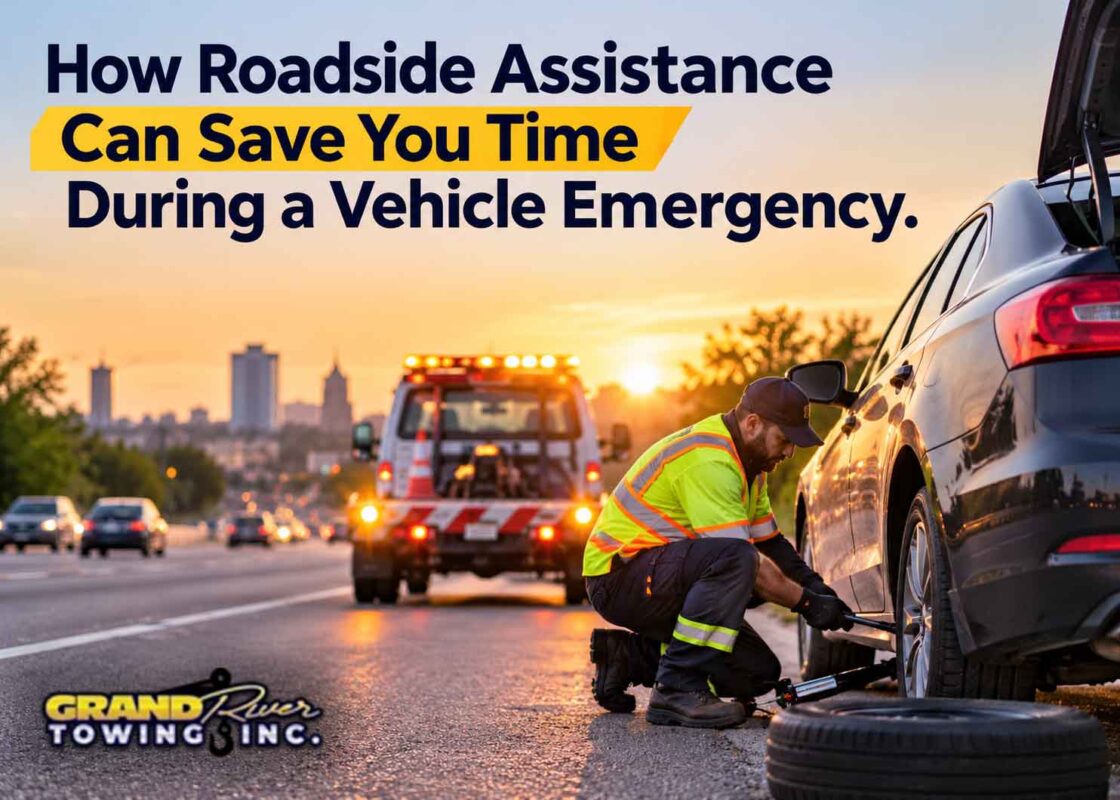
- Technicians arrive with their own lighting equipment. Portable work lights and reflective setups let them see the tire clearly and stay visible to traffic.
- Extra visibility measures go up immediately. Cones, flares, or additional hazard lighting go out before any work starts, more so than during a daytime call.
- The tire gets inspected under proper light. This catches issues, like rim damage or a compromised spare, that would be easy to miss in poor lighting.
- The vehicle gets a final safety check before you drive off. This matters more at night, since a missed issue is harder to catch again once you’re back on a dark road.
What to Do the Moment You Notice a Flat at Night
The first few actions after noticing a flat tire matter more after dark than during the day.
- Turn on your hazard lights immediately, even before you’ve found a place to stop.
- Look for a well-lit area to pull into, such as a gas station or parking lot, rather than stopping on the shoulder if you can safely reach one.
- Avoid standing outside the vehicle near traffic. If you’re on a busy or poorly lit road, staying inside with your seatbelt on is generally safer.
- Call for help rather than attempting the change yourself, particularly if you’re on a highway shoulder or a road without good lighting.
- Keep your phone charged and ready, since sharing your exact location becomes more important when visual landmarks are harder to describe in the dark.
Choosing a Safe Waiting Spot
Where you stop matters as much as how quickly you call for help. A well-lit parking lot, gas station, or business entrance beats a dark highway shoulder every time, even if it means driving a short distance further on a flat tire.
If pulling off the road entirely isn’t an option, get as far onto the shoulder as possible, keep hazard lights on, and avoid standing directly beside the vehicle facing traffic. Every bit of distance and visibility helps until help arrives.
Why Professional Help Beats a DIY Fix After Dark
It’s tempting to just handle a flat yourself, especially if you’ve done it before in daylight. Night changes the math. A technician trained for nighttime flat tire assistance brings equipment built for exactly this situation: proper lighting, reflective gear, and experience positioning safely near live traffic in the dark.
There’s also the question of what you might miss. A rim that’s cracked, a spare that’s underinflated, or a wheel bolt that’s stripped can all go unnoticed under a phone flashlight, only to become a bigger problem once you’re back on the road.
FAQ
Is it more dangerous to change a flat tire at night than during the day?
Yes, mainly due to reduced visibility for both you and approaching traffic. The tire problem is the same, but the surrounding risk increases significantly after dark.
How fast can emergency roadside tire service respond at night?
Response times depend on location and current demand, but a genuine 24-hour provider treats a 2 a.m. call with the same urgency as one at 2 p.m.
Should I try to drive to a gas station on a flat tire if it’s dark?
A short, slow drive to a well-lit area is often safer than stopping on a dark shoulder, as long as the tire isn’t fully shredded and you’re not risking further damage to the rim.
What should I have in my car in case of a nighttime flat?
A flashlight, reflective triangles or flares, and a fully charged phone make a big difference if you do end up waiting roadside for help.
Does emergency tire service cost more at night?
Some providers add a modest after-hours charge, though this varies. Ask directly when you call so you know what to expect before the truck arrives.
Final Word
A flat tire is inconvenient in daylight and genuinely risky after dark. The difference comes down to visibility, both yours and everyone else’s on the road around you.
Grand River Towing provides emergency tire service across Kitchener around the clock, with technicians equipped for safe, fast repairs no matter how dark the road is. Call now for nighttime tire service if you’re stuck tonight.