A short drive across Cambridge can change quickly during winter. Clear pavement in one area may become packed snow, black ice, or poor visibility a few kilometres later.
Most winter roadside problems are not caused by one dramatic mistake. They usually begin with worn tires, a weak battery, excessive speed, low fuel, or a driver following too closely for the conditions.
These winter driving tips Cambridge motorists can use focus on prevention, vehicle control, and knowing when to stop driving and call for professional help.
TL;DR
Prepare your vehicle before winter, use proper winter tires, slow down, leave more stopping distance, and avoid sudden steering or braking. Call for emergency towing if your vehicle is stuck in a dangerous location, has damaged tires, is overheating, will not start, or cannot be driven safely.
Objective
This guide explains how Cambridge drivers can reduce winter breakdown risks, respond safely to snow and ice, and decide when roadside assistance or towing is required.
Key Takeaways
- Winter tires improve grip in cold temperatures, snow, and slush.
- A weak battery may fail during the first serious cold spell.
- Speed and following distance should change with road conditions.
- Spinning the tires can make a stuck vehicle harder to recover.
- Drivers should carry a winter emergency kit.
- Towing is safer than driving with damaged tires, steering, brakes, or an overheating engine.
Table of Contents
- Why Winter Driving in Cambridge Requires Extra Preparation
- Prepare Your Vehicle Before Cold Weather Arrives
- Winter Driving Tips for Snow, Ice, and Poor Visibility
- Common Winter Roadside Emergencies
- When to Call Winter Roadside Assistance in Cambridge
- When Emergency Towing Is the Safer Choice
- What to Keep in a Winter Emergency Kit
- Frequently Asked Questions
Why Winter Driving in Cambridge Requires Extra Preparation
Cambridge winters bring freezing temperatures, snow, slush, strong wind, and sudden changes in road conditions.
Major routes such as Hespeler Road, Franklin Boulevard, Highway 24, Highway 401, and regional roads may be cleared quickly, but ramps, bridges, side streets, parking lots, and rural roads can remain slippery.
Bridges and overpasses often freeze before surrounding pavement because cold air reaches both the upper and lower surfaces. Shaded areas can also hold ice longer, even when the road looks mostly clear.
Snowbanks may narrow lanes and block sightlines at intersections. Slush can pull at the tires, while packed snow reduces braking and steering response.
Drivers need to adjust before the vehicle begins sliding. Once traction is lost, there may be little time or space to correct it.
Preparation also matters because cold weather places additional strain on batteries, tires, belts, fluids, and charging systems. A vehicle that ran normally in autumn may expose a weak component during the first cold week.
Prepare Your Vehicle Before Cold Weather Arrives
Winter reliability begins before the forecast calls for heavy snow.
A basic inspection can identify worn parts while the vehicle is still parked at home rather than stopped on the shoulder.
Install Suitable Winter Tires
Winter tires are designed to remain more flexible in cold temperatures. Their tread patterns also help move snow and slush away from the contact area.
Check:
- Tread depth
- Tire pressure
- Sidewall condition
- Uneven wear
- Age of the tires
- Condition of the spare
Cold air reduces tire pressure. A tire that was correctly inflated during warmer weather may become underinflated as temperatures fall.
Use the pressure listed on the vehicle information label or in the owner’s manual. Do not use the maximum pressure printed on the tire sidewall as the normal setting.
All four winter tires should match in size, type, and general condition. Mixing tires with different grip levels can affect stability during braking and cornering.
Test the Battery and Charging System
Cold weather slows the chemical reaction inside a battery while the engine needs more power to start.
Common warning signs include:
- Slow engine cranking
- Dimming lights during startup
- Clicking when the key is turned
- Frequent jump-starts
- Corrosion around the terminals
- A battery or charging warning light
A battery test can show whether the battery is holding sufficient charge. The alternator and cable connections should also be checked if the vehicle repeatedly loses power.
A battery boost may restart the car, but it does not repair a failing battery or charging system.
Check Fluids and Cooling-System Components
Coolant protects the engine from freezing and overheating. The correct mixture and level matter throughout winter.
Inspect the vehicle for leaks and have damaged hoses, clamps, or cooling-system parts repaired before cold weather becomes severe.
Also check:
- Engine oil
- Brake fluid
- Transmission fluid, where applicable
- Power steering fluid, where applicable
- Windshield-washer fluid rated for winter use
Do not fill the washer reservoir with plain water. It can freeze inside the reservoir, pump, or washer lines.
Inspect Wipers, Lights, and Defrosters
Visibility can disappear quickly during wet snow or road spray.
Replace wiper blades that streak, skip, or leave sections of the windshield uncleared. Confirm that front and rear defrosters work properly.
Clean snow, ice, and road salt from:
- Headlights
- Brake lights
- Turn signals
- Mirrors
- Camera lenses
- Sensors
- Licence plates
Do not drive with only a small opening cleared in the windshield. Snow on the roof can slide forward during braking or blow onto vehicles behind you.
Winter Driving Tips Cambridge Motorists Can Use
Good winter driving is less about reacting quickly and more about avoiding sudden situations.
Reduce Speed Before Conditions Become Dangerous
The posted speed limit applies under favourable road conditions. Snow, ice, fog, and poor visibility may require a much lower speed.
Slow down before curves, ramps, intersections, and downhill sections. Braking while already turning can reduce the available grip.
A vehicle may feel stable at a steady speed but lose traction during a sudden stop or lane change.
Increase Following Distance
Stopping distance grows on snow and ice.
Leave enough room to slow gradually without hard braking. The space should increase further when visibility is poor or traffic is moving downhill.
Avoid following large trucks closely. Snow, slush, and spray from their tires can block your view. Ice may also fall from poorly cleared vehicle surfaces.
Use Smooth Steering and Braking
Quick steering, hard acceleration, and sudden braking can overwhelm the tires.
Apply the accelerator gradually. Begin braking earlier than normal and keep steering inputs controlled.
Vehicles with anti-lock braking systems are designed to allow firm, steady brake pressure during an emergency stop. Drivers should follow the instructions in their owner’s manual for the specific vehicle.
Watch for Black Ice
Black ice may look like wet pavement. It often develops on bridges, ramps, shaded areas, and roads near open fields or water.
Signs can include:
- Other vehicles moving unexpectedly
- A shiny road surface
- Reduced tire noise
- Light steering response
- Sudden wheel slip during acceleration
If traction decreases, ease off the accelerator. Avoid sharp steering or hard braking.
Avoid Cruise Control on Slippery Roads
Cruise control can apply power when the tires begin losing grip. Drivers need direct control of acceleration in changing winter conditions.
Use normal pedal control on snow, slush, ice, and standing water.
Plan Before Leaving
Check road and weather conditions before a longer trip.
Allow extra travel time and tell someone your route when conditions are poor. Keep the fuel tank from becoming nearly empty, especially when delays are possible.
A vehicle stuck in traffic still needs fuel for heat, lighting, and charging devices.
Common Winter Roadside Emergencies
Winter creates several recurring roadside problems in Cambridge.
Dead Battery
A vehicle may start normally during mild weather and fail after a sudden temperature drop.
A professional battery boost can help when the battery is discharged but otherwise functional. If the vehicle does not continue running or loses power again, the alternator or battery may need repair.
Flat or Damaged Tire
Potholes, hidden debris, low tire pressure, and cold temperatures can contribute to tire damage.
Changing a tire on a narrow, snowy shoulder may be unsafe. Drivers should not stand close to passing traffic to install a spare.
Call for a tire change service Cambridge drivers can use when the location, weather, or vehicle condition makes the job unsafe.
Vehicle Stuck in Snow
A vehicle can become stuck in a driveway, parking lot, roadside snowbank, or unplowed area.
Light wheel spin may sometimes clear loose snow. Repeated high-speed spinning usually digs the tires deeper and creates ice beneath them.
Stop if the vehicle is not moving. Check that the exhaust pipe is not blocked by snow, especially if the engine remains running.
A tow truck may need to winch the vehicle from a safer angle.
Frozen or Damaged Components
Cold weather can affect door locks, washer systems, parking brakes, and exposed electrical connections.
Do not force a frozen component. Excessive force may break handles, cables, wiper arms, or locks.
Collision or Slide-Off
A low-speed slide can still damage wheels, suspension, steering, body panels, and underbody parts.
A vehicle that enters a ditch or strikes a curb should be assessed before it is driven. Hidden suspension damage can affect control.
When to Call Winter Roadside Assistance Cambridge Drivers Can Trust
Not every winter problem requires a full tow.
Roadside assistance may solve the issue when the vehicle remains in a safe position and the problem can be corrected at the scene.
Call for winter roadside assistance Cambridge service when you need:
- A battery boost
- A spare-tire installation
- Help with a minor roadside problem
- Assistance moving from a snow-covered parking area
- An initial assessment before towing
- Recovery from a manageable snowbank or soft shoulder
Tell the dispatcher about the surrounding conditions.
Useful details include:
- Exact location
- Direction of travel
- Nearby intersection or exit
- Vehicle make and model
- Type of problem
- Whether the vehicle is blocking traffic
- Depth of the snow
- Whether any wheels are damaged
- Number of passengers
- Any immediate safety concerns
Accurate information helps the towing company send suitable equipment.
Grand River Towing provides 24/7 roadside assistance in Cambridge for battery problems, tire issues, breakdowns, and winter roadside emergencies.
When Emergency Towing Services Cambridge Drivers Need Are Safer
A vehicle should be towed when driving it may cause further damage or put road users at risk.
Call for emergency towing services Cambridge when:
- The engine is overheating.
- Steering or braking has changed.
- A tire or wheel is severely damaged.
- The vehicle has entered a ditch.
- Suspension parts appear bent or broken.
- Fluid is leaking.
- The vehicle will not remain running.
- A warning light is flashing.
- The car has collision damage.
- Snow or ice has damaged underbody parts.
- Visibility from the vehicle is not safe.
- The vehicle is blocking an active lane.
Do not drive simply because the vehicle can move.
A car with a damaged wheel may travel slowly but remain unstable. An overheating engine may continue running while serious internal damage develops. A collision-damaged vehicle may have hidden steering or braking faults.
Professional winter towing services Cambridge operators assess the vehicle’s position, condition, and drivetrain before moving it.
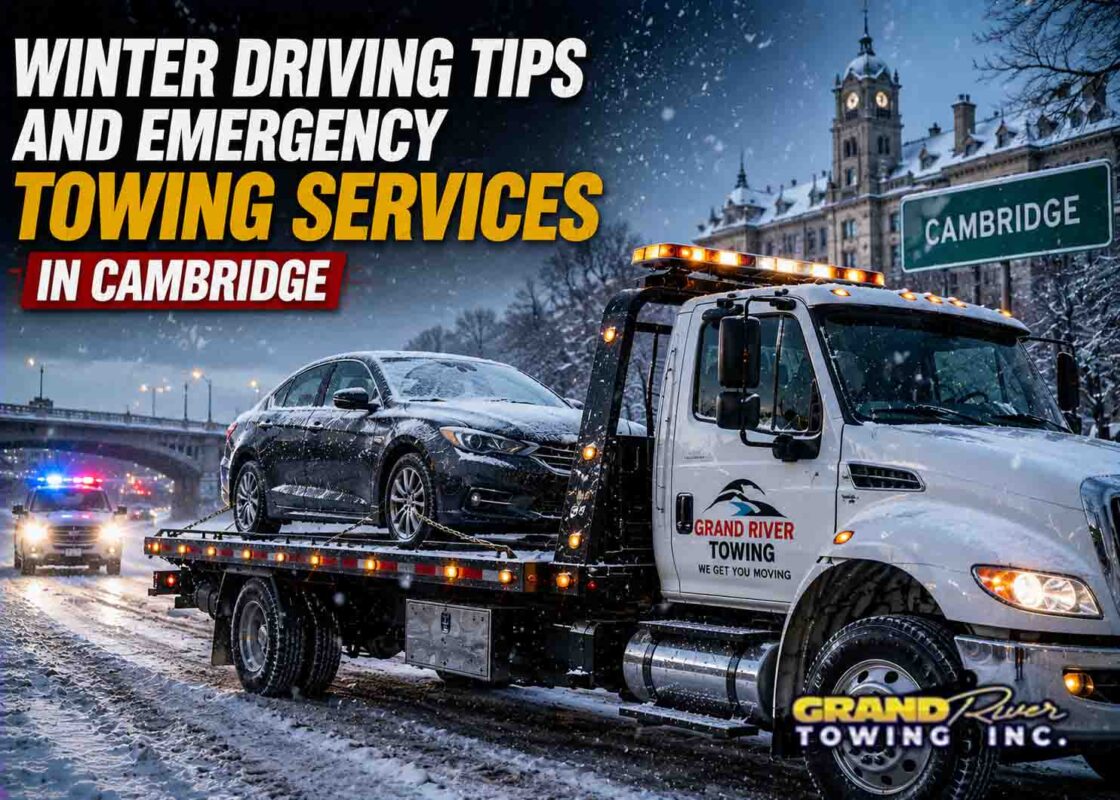
Flatbed towing may be used for AWD vehicles, low-clearance cars, electric vehicles, collision-damaged vehicles, and vehicles with locked or damaged wheels.
What to Keep in a Winter Emergency Kit
A winter emergency kit should help you remain visible, warm, and able to communicate while assistance is on the way.
Keep these items in the vehicle:
- Warm blanket
- Gloves and winter hat
- Flashlight with spare batteries
- Reflective vest
- Warning triangles
- Phone charging cable
- Portable power bank
- First-aid supplies
- Small shovel
- Snow brush and ice scraper
- Traction aid or sand
- Bottled water
- Non-perishable snacks
- Windshield-washer fluid
- Basic tool kit
- Jumper cables or approved booster pack
- Vehicle documents
Check the kit at the start of each winter. Replace expired food, discharged batteries, damaged cables, and missing supplies.
Keep essential items inside the passenger area if the trunk may become difficult to open after a collision or heavy snowfall.
What to Do While Waiting for a Tow Truck
Move the vehicle as far from active traffic as possible if it can be moved safely.
Turn on the hazard lights and apply the parking brake. Remain inside the vehicle when standing outside would place you near moving traffic.
If the vehicle is in a ditch, unstable position, or active lane, follow emergency-service instructions. Do not stand in the path between the tow truck and the vehicle during recovery.
Clear enough snow from the vehicle to make it visible, but do not work close to passing traffic.
Keep the exhaust pipe clear if the engine is running. Snow blocking the exhaust can allow dangerous gases to collect around or inside the vehicle.
Tell the dispatcher if conditions change while you wait. A vehicle that begins sliding, leaking fluid, or becoming difficult for traffic to see may require an updated response.
Frequently Asked Questions
Are winter tires necessary for driving in Cambridge?
Winter tires are strongly recommended because their rubber and tread are designed for cold temperatures, snow, slush, and ice. They improve traction but do not remove the need to reduce speed and increase following distance.
Can roadside assistance start my car in freezing weather?
A battery boost may start a vehicle with a discharged battery. If the battery is damaged or the alternator is not charging, the vehicle may need towing for further testing and repair.
Should I keep trying if my vehicle is stuck in snow?
Stop if repeated wheel spinning is not moving the vehicle. Spinning can dig the tires deeper and create packed ice underneath. Clear loose snow where safe and call for recovery if traction does not improve.
Is it safe to change a tire on a snowy road shoulder?
Only when the vehicle is well away from traffic, parked on firm and level ground, and clearly visible. Call for roadside assistance when the shoulder is narrow, icy, soft, sloped, or close to moving traffic.
When does a winter breakdown require towing?
Towing is appropriate when the vehicle cannot be driven safely, has steering or brake problems, is overheating, has a damaged wheel, is stuck in a ditch, or has collision damage.
Is emergency towing available at night in Cambridge?
Yes. Grand River Towing provides 24/7 emergency towing Cambridge drivers can request for winter breakdowns, collisions, stuck vehicles, and unsafe roadside situations.
Winter preparation lowers the risk of a breakdown, but it cannot prevent every dead battery, damaged tire, slide-off, or mechanical failure. If your vehicle becomes unsafe to drive, stop in a secure location and request professional help. For 24/7 emergency towing in Cambridge, contact Grand River Towing at +1 (519) 729-0982.