A luxury car or all-wheel-drive vehicle cannot always be towed the same way as a standard front-wheel-drive sedan.
The drivetrain may require all four wheels to remain off the road. A low front bumper can scrape during loading. Large wheels, performance tires, air suspension, and underbody panels may also need additional care.
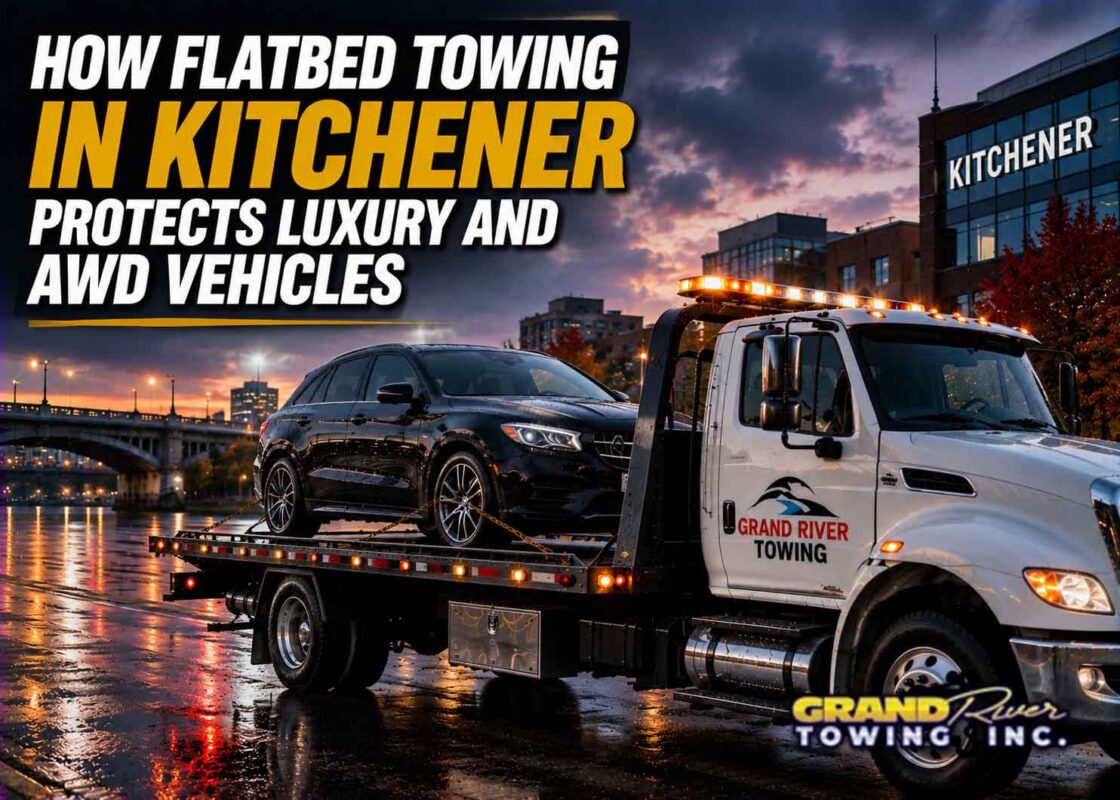
Professional flatbed towing Kitchener drivers can request keeps the entire vehicle raised from the road during transport. This reduces stress on the drivetrain and lowers the risk of damage to the wheels, body, suspension, and undercarriage.
TL;DR
Flatbed towing carries the whole vehicle on a truck platform, keeping all four wheels off the road. It is often the safest option for AWD, luxury, electric, low-clearance, collision-damaged, and non-running vehicles because it limits drivetrain movement and protects vulnerable exterior and underbody parts.
Objective
This guide explains how flatbed towing works, why it is commonly used for luxury and AWD vehicles, how it compares with wheel-lift towing, and what Kitchener drivers should check before arranging transport.
Key Takeaways
- Flatbed towing keeps every wheel off the road.
- Many AWD vehicles should not be towed with two wheels rolling.
- Low-clearance cars require controlled loading angles.
- Proper tie-down methods protect wheels, suspension, and bodywork.
- Electric and luxury vehicles may have sensitive underbody components.
- The towing method should be based on the vehicle, not only the distance.
- Drivers should describe the vehicle accurately before the truck is dispatched.
Table of Contents
- What Flatbed Towing Is
- Why AWD Vehicles Often Need Flatbed Towing
- How Flatbed Towing Protects Luxury Cars
- How the Flatbed Loading Process Works
- Flatbed Towing Versus Wheel-Lift Towing
- When Flatbed Towing Is the Best Option
- Flatbed Towing Costs in Kitchener
- Choosing a Safe Towing Provider
- Frequently Asked Questions
What Is Flatbed Towing?
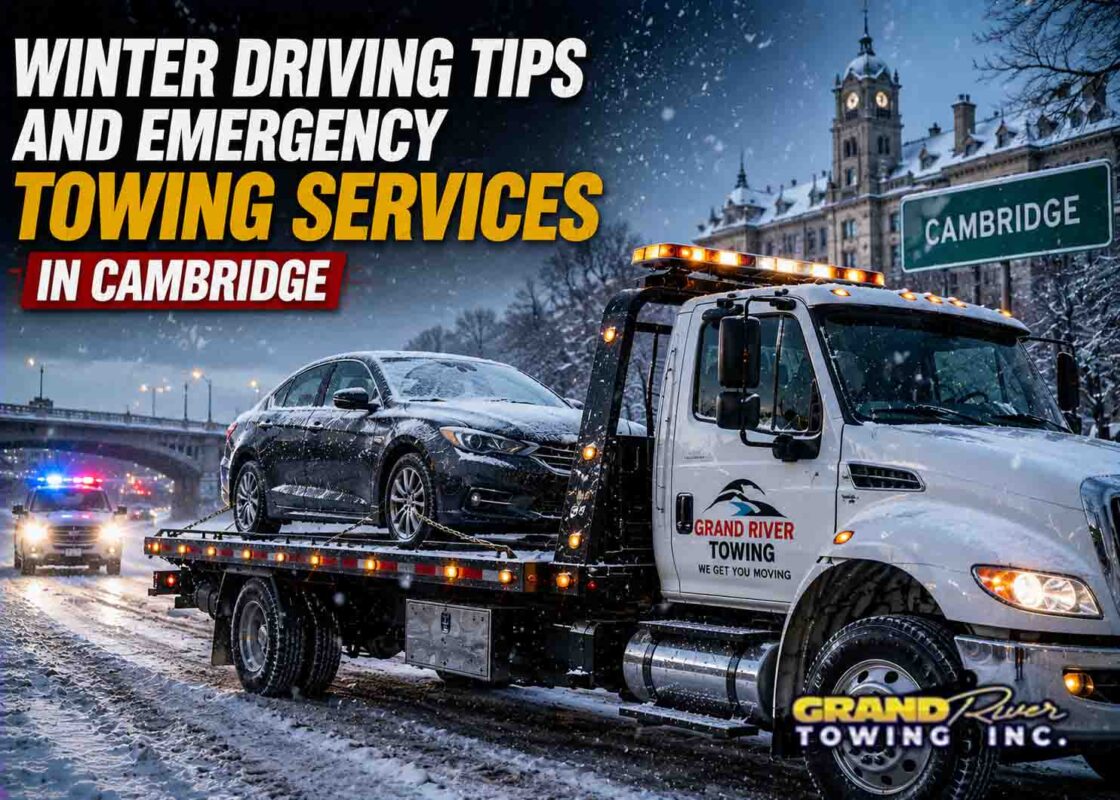
A flatbed tow truck has a long platform mounted behind the cab. The platform tilts and lowers toward the ground so a vehicle can be pulled or driven onto it.
Once the vehicle is loaded, the platform returns to its transport position. The vehicle is then secured to the bed before the truck moves.
Unlike a wheel-lift tow, no vehicle wheels remain on the road.
This makes flatbed transport suitable for vehicles that should not roll, including cars with:
- AWD or four-wheel-drive systems
- Transmission problems
- Locked wheels
- Damaged suspension
- Flat or missing tires
- Collision damage
- Low ground clearance
- Steering failure
- Electric drivetrains
- Loose body components
The flatbed also provides a stable transport surface. The vehicle does not track behind the tow truck or rotate its tires during the journey.
That difference matters when the vehicle has sensitive mechanical parts or expensive bodywork.
Why AWD Vehicle Towing Kitchener Drivers Arrange Often Requires a Flatbed
All-wheel-drive systems deliver power to all four wheels. Depending on the design, the front and rear axles may remain mechanically connected through a centre differential, transfer case, clutch system, or electronic control system.
Towing an AWD vehicle with two wheels on the road can cause the rolling wheels to move parts of the drivetrain while the raised wheels remain stationary.
That can create unnecessary stress or heat inside components such as:
- Differentials
- Transfer cases
- Driveshafts
- Transmissions
- Electronic clutch systems
- Axles
The exact towing requirements vary by manufacturer and model. Some vehicles allow limited towing under specific conditions, while others require all wheels to be raised.
A flatbed removes much of the uncertainty because the complete vehicle travels on the truck.
The Owner’s Manual Still Matters
Drivers should check the emergency towing section of the owner’s manual when possible.
Manufacturers may provide instructions covering:
- Which wheels may remain on the road
- Maximum towing distance
- Maximum towing speed
- Whether dollies are required
- How to place the transmission in neutral
- Electronic parking-brake release procedures
- Tow-hook locations
- Transport mode settings
Modern AWD systems are not all built the same. The correct method for one SUV may be unsuitable for another.
Professional AWD vehicle towing Kitchener operators should ask for the make, model, year, and drivetrain before dispatching equipment.
How Flatbed Towing Protects Luxury Cars
Luxury vehicles often combine expensive bodywork with complex suspension, electronics, braking, and drivetrain systems.
The towing process must protect more than the paint.
It Keeps the Wheels Off the Road
Large alloy wheels and low-profile tires can be damaged by potholes, debris, curb contact, and road movement during transport.
Flatbed towing removes road contact completely.
This is especially helpful when a tire is flat, a wheel is bent, or the suspension has been damaged.
It Protects Low Ground Clearance
Many luxury and performance vehicles have:
- Low front splitters
- Deep side skirts
- Rear diffusers
- Lowered suspension
- Long front overhangs
- Carbon-fibre trim
- Low exhaust components
A steep loading angle can scrape or crack these parts.
Operators providing luxury car towing Kitchener service may use extended ramps, wood blocking, wheel skates, or controlled bed positioning to reduce the approach angle.
Loading should be slow. Forcing the vehicle onto the bed can damage the front bumper before transport even begins.
It Reduces Drivetrain Movement
Luxury vehicles may use AWD, rear-wheel-drive, hybrid, or electric systems with specific towing requirements.
Keeping all four wheels stationary limits internal drivetrain movement.
This helps protect expensive mechanical and electronic components from avoidable stress.
It Protects Air Suspension Systems
Some luxury cars automatically raise or lower themselves based on speed, drive mode, or ignition status.
The suspension may need to be placed in a transport, jack, or service mode before loading. Failing to follow the correct procedure can affect ride height or suspension operation.
The operator should not guess. Vehicle-specific instructions may be required.
It Limits Exposure to Road Debris
A vehicle carried on a flatbed remains higher than one being towed with two wheels on the road.
This can reduce exposure to:
- Loose gravel
- Standing water
- Road salt
- Mud
- Snow
- Construction debris
The vehicle is not completely protected from the environment, but it avoids direct contact through its tires and lower body.
How Flatbed Towing Services Kitchener Drivers Use Work
Safe transport begins with accurate information.
Before sending the truck, the dispatcher may ask:
- What is the vehicle make, model, and year?
- Is it AWD, four-wheel drive, electric, or hybrid?
- Does it have low ground clearance?
- Can it roll, steer, and brake?
- Are any wheels locked or damaged?
- Has it been in a collision?
- Is it in a parking garage or tight area?
- Is fluid leaking?
- Where should it be taken?
These details help the operator prepare for the loading conditions.
Step 1: Positioning the Tow Truck
The operator parks the truck where the flatbed can lower safely.
The road surface, slope, traffic, overhead clearance, and available space all affect positioning.
A narrow street or busy road may require a different setup from a private driveway.
Step 2: Inspecting the Vehicle
Before loading, the operator checks:
- Wheel condition
- Steering position
- Ground clearance
- Visible collision damage
- Fluid leaks
- Loose body panels
- Vehicle stability
- Suitable recovery points
A damaged vehicle may not behave normally during loading. One wheel may drag, or the car may shift sideways because of steering or suspension damage.
Step 3: Preparing the Vehicle
The transmission may need to be placed in neutral. The electronic parking brake may need to be released.
If the vehicle has no power, the operator may need to follow a manual release procedure or use wheel skates.
Tow hooks or manufacturer-approved recovery points may also need to be installed.
Step 4: Winching the Vehicle Onto the Bed
The winch pulls the vehicle slowly onto the platform.
The cable should connect to an approved recovery point. Bumpers, control arms, tie rods, and body panels should not be used as random pulling points.
The operator watches the front bumper, wheels, suspension, and underbody throughout loading.
Step 5: Securing the Vehicle
The vehicle is held in position using straps or chains rated for transport.
Securement methods may involve the tires, wheels, frame, or approved tie-down points, depending on the vehicle.
The goal is to control movement without damaging wheel finishes, brake parts, suspension components, or bodywork.
Step 6: Final Inspection
Before leaving, the operator checks the vehicle position and securement.
The destination should also be confirmed. This may be a repair shop, dealership, body shop, home, storage facility, or another approved location.
Flatbed Towing Versus Wheel-Lift Towing
Both towing methods have valid uses. The correct option depends on the vehicle and situation.
| Factor | Flatbed Towing | Wheel-Lift Towing |
| Wheel contact | All wheels off the road | Two wheels remain on the road |
| AWD suitability | Commonly preferred | May require dollies or restrictions |
| Low-clearance vehicles | Better control with proper ramps | May create clearance concerns |
| Damaged wheels | Suitable when loading is controlled | May not be suitable if rolling wheels are damaged |
| Long-distance transport | Often preferred | Commonly used for shorter distances |
| Collision damage | Suitable for many damaged vehicles | Depends on wheel and suspension condition |
| Loading space | Requires more working room | Can operate in tighter areas |
| Vehicle stability | Entire vehicle secured on the bed | Vehicle follows behind on two wheels |
Wheel-lift towing can be effective for many standard vehicles when performed correctly.
It may also be useful in narrow parking areas where a flatbed cannot be positioned.
Flatbed towing becomes the safer option when the vehicle design or condition makes wheel contact risky.
The towing provider should explain why a particular method is being recommended.
When Safe Vehicle Towing Requires a Flatbed
Flatbed towing is often appropriate in the following situations.
AWD and Four-Wheel-Drive Vehicles
Keeping all wheels raised helps prevent unwanted drivetrain movement.
Luxury and Performance Cars
These vehicles often have low ground clearance, expensive wheels, sensitive suspension, and manufacturer-specific towing procedures.
Electric Vehicles
Electric vehicles may have low-mounted battery enclosures and complex drive systems.
They may also become difficult to move when electrical power is unavailable or the parking brake remains engaged.
Vehicle-specific recovery procedures should be followed.
Collision-Damaged Cars
A collision can damage wheels, suspension, steering, brakes, body panels, and cooling components.
Flatbed transport keeps the vehicle stable while preventing damaged wheels from rolling.
Vehicles With Flat or Damaged Tires
A tire that has separated from the wheel or suffered severe sidewall damage should not remain on the road during towing.
Lowered Vehicles
Aftermarket suspension, body kits, and low splitters require a controlled loading angle.
Transmission or Drivetrain Failure
A vehicle that will not shift into neutral or has internal drivetrain damage may need to remain stationary during transport.
Classic and Collector Vehicles
Owners often choose flatbed transport to limit mileage, wheel rotation, and road contact.
Long-Distance Vehicle Transport
Keeping the complete vehicle on the platform reduces wear on its tires and drivetrain during a longer tow.
How Much Does Flatbed Towing Cost in Kitchener?
Flatbed towing cost depends on the service required.
Common pricing factors include:
- Pickup location
- Towing distance
- Vehicle size and weight
- Time of day
- Road and weather conditions
- Vehicle condition
- Loading difficulty
- Winching requirements
- Locked or damaged wheels
- Parking-garage access
- Destination
- Additional recovery equipment
A working luxury sedan in a level driveway is easier to load than an AWD SUV with broken suspension in a snowbank.
Give the dispatcher complete information before requesting a quote.
Ask:
- What does the quoted price include?
- Is mileage included?
- Are there additional loading or winching charges?
- Does the vehicle condition affect the cost?
- Are storage fees involved?
- Will I receive a receipt?
A clear quote should be discussed before the vehicle is loaded.
Do not choose a towing method only because it has the lowest initial price. Incorrect towing can create drivetrain or body damage that costs far more than the difference between services.
What to Look for in a Flatbed Towing Provider
Choosing a truck is only part of the decision. The operator’s process matters just as much.
Vehicle-Specific Experience
The provider should understand AWD, electric, luxury, lowered, and collision-damaged vehicles.
Mention special features before dispatch.
Proper Loading Equipment
Safe loading may require:
- Extended ramps
- Wheel skates
- Soft straps
- Winching equipment
- Dollies
- Low-angle positioning equipment
The required setup depends on the vehicle.
Clear Communication
The dispatcher and operator should explain:
- The recommended towing method
- The expected arrival window
- Pricing
- Loading concerns
- The destination
- Payment options
24/7 Availability
Breakdowns and collisions happen outside normal business hours.
Grand River Towing provides flatbed towing services in Kitchener for roadside emergencies, vehicle breakdowns, accident recovery, and planned transport.
Proper Vehicle Securement
Ask how the vehicle will be secured if you have concerns about painted wheels, carbon-fibre parts, air suspension, or other sensitive components.
The operator should not attach equipment to random suspension or body parts.
Local Service Knowledge
A local provider is familiar with Kitchener roads, neighbourhoods, repair facilities, dealerships, industrial areas, and major regional routes.
This can make pickup and delivery more direct.
What Drivers Should Do Before the Flatbed Arrives
A few steps can make the recovery process easier.
- Move to a safe position when possible.
- Turn on the hazard lights.
- Stay away from active traffic.
- Remove valuable personal items.
- Confirm the destination.
- Locate the vehicle key.
- Check the owner’s manual for towing instructions.
- Tell the dispatcher about low clearance or modifications.
- Mention any fluid leaks.
- Explain if the steering, brakes, or wheels are damaged.
- Keep the vehicle accessible for loading.
Do not attempt to push a heavy vehicle in traffic or on a slope.
If the vehicle is unstable, in a ditch, or damaged after a collision, wait for the operator to assess it.
Frequently Asked Questions
Is flatbed towing required for every AWD vehicle?
Not every AWD vehicle has identical towing requirements, but many manufacturers recommend keeping all four wheels off the road. Check the owner’s manual and provide the towing company with the exact vehicle details.
Can flatbed towing damage a low luxury car?
Professional flatbed towing should not damage a low vehicle when the correct loading angle, ramps, recovery points, and securement methods are used. Tell the dispatcher about low ground clearance before the truck arrives.
Is flatbed towing suitable for electric vehicles?
Yes. Flatbeds are commonly used for electric vehicles because all wheels remain off the road. Operators should still follow the manufacturer’s transport and power-release procedures.
Can a flatbed tow a car with locked wheels?
Yes. Wheel skates, dollies, controlled winching, or other equipment may be used to move a vehicle with locked wheels onto the platform.
Is flatbed towing more expensive than wheel-lift towing?
It can cost more because of the equipment and loading process. The final price depends on distance, vehicle condition, recovery difficulty, and location. It may prevent more expensive damage when the vehicle requires full off-road transport.
How do I request flatbed towing in Kitchener?
Provide your location, vehicle make and model, drivetrain type, condition, ground clearance, and destination. For 24/7 flatbed towing Kitchener service, contact Grand River Towing at +1 (519) 729-0982.
Luxury, AWD, electric, and low-clearance vehicles need more than basic roadside movement. They need a towing method suited to their drivetrain, wheels, suspension, and body design. For professional safe vehicle towing, call Grand River Towing or request flatbed assistance in Kitchener.