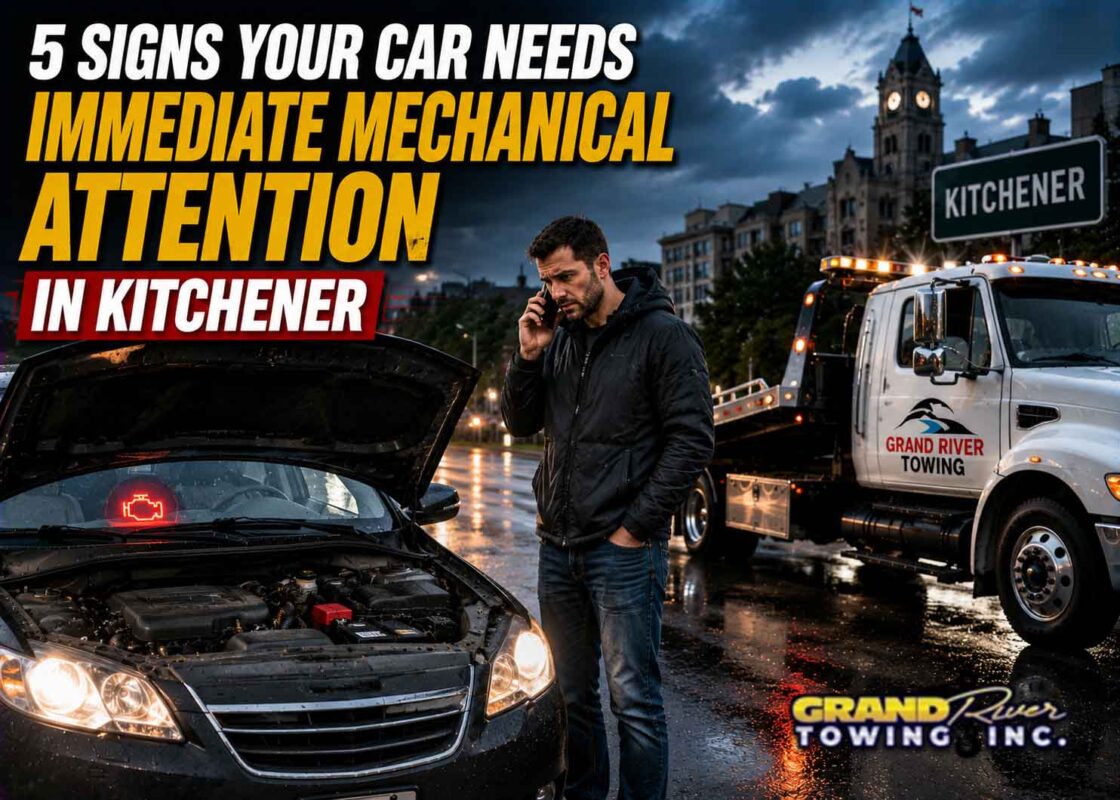
A warning light appears during your morning drive. The steering suddenly feels heavier. You hear a grinding sound each time you brake, but the car still moves.
Many drivers continue because they are close to home, work, or a repair shop. That decision can make a small mechanical issue more expensive and put the driver, passengers, and other road users at risk.
Recognizing car mechanical problems Kitchener drivers commonly face helps you decide when to book a repair and when the vehicle should not be driven at all.
TL;DR
Stop driving if your vehicle is overheating, losing braking ability, making severe engine noises, leaking important fluids, or showing steering and suspension problems. Continuing to drive can increase repair costs and create a safety risk. Arrange immediate inspection or professional towing when the vehicle no longer feels safe or predictable.
Objective
This guide explains five warning signs that require immediate mechanical attention, what may be causing them, and when Kitchener drivers should call for towing instead of attempting to reach a repair shop.
Key Takeaways
- Rising engine temperature can lead to major engine damage.
- Brake grinding, a soft pedal, or reduced stopping power requires immediate attention.
- Knocking, banging, or heavy vibration can signal internal mechanical damage.
- Fluid leaks should be identified before the vehicle is driven further.
- Sudden steering or suspension changes can affect vehicle control.
- A vehicle that starts and moves may still be unsafe to drive.
- Towing is often less expensive than repairing damage caused by continuing to drive.
Table of Contents
- Why Mechanical Warning Signs Should Not Be Ignored
- Sign 1: The Engine Is Overheating
- Sign 2: Braking Performance Has Changed
- Sign 3: The Engine Is Knocking or Running Rough
- Sign 4: Fluid Is Leaking Under the Vehicle
- Sign 5: Steering or Suspension Feels Different
- When Immediate Car Repair in Kitchener Is Required
- When to Call a Tow Truck
- Frequently Asked Questions
Why Car Mechanical Problems Kitchener Drivers Notice Need Fast Attention
Vehicles often give some warning before a complete failure.
An engine may begin running hotter than normal. Brakes may start squealing before they grind. A wheel bearing may hum before it becomes loose enough to affect handling.
The problem is that warning signs can appear gradually. Drivers become used to the sound, vibration, or change in performance and delay arranging an inspection.
Road conditions around Kitchener can also place extra stress on a vehicle. Potholes can affect tires, wheels, steering, and suspension. Stop-and-go traffic increases brake use. Cold starts place more demand on batteries, belts, and fluids.
Not every unusual sound means the vehicle is about to fail. It does mean something has changed.
A prompt inspection gives a technician the chance to identify the cause while the vehicle is still controllable. Waiting until it stops moving often leads to a larger repair and an unplanned towing call.
Sign 1: The Engine Is Overheating
An overheating engine needs immediate attention.
The first warning may be a temperature gauge moving above its normal position. You may also see a coolant warning light, smell something sweet, or notice steam coming from under the hood.
Common causes include:
- Low coolant
- A damaged radiator hose
- A coolant leak
- A failed thermostat
- A faulty cooling fan
- A weak water pump
- Radiator damage
- A damaged drive belt
- Internal engine problems
Continuing to drive can warp the cylinder head, damage the head gasket, or affect the engine block. Repairs that may have started with a hose, thermostat, or cooling fan can become far more expensive.
What You Should Do
Move to a safe location and switch off the engine.
Do not open the radiator or coolant cap while the engine is hot. Cooling systems operate under pressure, and hot coolant can cause severe burns.
Allow the vehicle to cool and check for visible leaks only when it is safe. Adding coolant does not fix the source of the problem. The vehicle may overheat again within minutes.
Call for towing if:
- Steam is coming from the engine area.
- Coolant is leaking heavily.
- The temperature rises again after cooling.
- The vehicle has already overheated more than once.
- A belt is broken.
- The engine runs roughly after overheating.
Arranging immediate car repair Kitchener service after overheating can prevent further internal damage.
Sign 2: Braking Performance Has Changed
Brakes should feel consistent and predictable.
Any sudden change in pedal feel, stopping distance, noise, or vehicle movement needs attention. Brake problems usually become more dangerous as driving continues.
Watch for:
- Grinding during braking
- A soft or sinking brake pedal
- The vehicle pulling to one side
- Vibration through the pedal or steering wheel
- A brake warning light
- A burning smell near a wheel
- Reduced stopping power
- Fluid beneath the vehicle
- A brake pedal that feels unusually hard
- Scraping that continues after the brake pedal is released
A high-pitched squeal may indicate worn brake pads. Grinding can mean the friction material has worn away and metal is contacting metal.
That can damage rotors, increase stopping distance, and reduce control.
A soft pedal may point to air in the hydraulic system, low brake fluid, a leak, or a failing component. These conditions should not be tested by continuing to drive.
When to Stop Immediately
Do not drive if:
- The brake pedal reaches the floor.
- The vehicle does not stop normally.
- Brake fluid is leaking.
- The brake warning light appears with reduced braking.
- The vehicle pulls sharply under braking.
- A wheel is smoking or extremely hot.
Use the parking brake carefully if required to secure the stopped vehicle. Turn on the hazard lights and request professional towing.
Driving slowly does not make a serious brake problem safe.
Sign 3: The Engine Is Knocking, Shaking, or Losing Power
Engines create many normal sounds, but new knocking, banging, rattling, or heavy vibration should not be ignored.
Possible causes include:
- Low engine oil
- Internal bearing wear
- Ignition misfires
- Failed spark plugs or coils
- Fuel-delivery problems
- Timing-system faults
- Belt or pulley damage
- Exhaust-system damage
- Loose engine mounts
- Sensor or electrical faults
A light ticking sound and a heavy metallic knock are not the same problem. Both require diagnosis, but a deep knock that changes with engine speed may indicate serious internal wear.
A flashing check-engine light can also indicate an active misfire. Continuing to drive may damage the catalytic converter and affect engine performance.
Warning Signs That Require Immediate Attention
Arrange urgent auto repair Kitchener service if you notice:
- A flashing engine warning light
- Strong shaking at idle
- Sudden loss of acceleration
- Loud knocking from the engine
- Smoke from the exhaust
- A burning smell
- Stalling in traffic
- Oil-pressure warning
- Severe vibration that increases with speed
If the oil-pressure warning appears, stop the engine as soon as it is safe. Low oil pressure can cause internal damage very quickly.
Do not keep restarting the engine to see whether the warning disappears.
When Towing Is Safer
Call for towing when the engine is knocking loudly, has lost oil pressure, stalls repeatedly, or cannot maintain safe road speed.
A tow to a repair facility costs less than replacing an engine damaged by continued operation.
Sign 4: Fluid Is Leaking Under the Vehicle
Some moisture under a vehicle is normal. Water from the air-conditioning system can drip after the system has been running.
Coloured, oily, sticky, or strong-smelling fluid needs closer attention.
Common vehicle fluids include:
- Engine oil
- Coolant
- Brake fluid
- Transmission fluid
- Power steering fluid
- Fuel
- Windshield-washer fluid
- Differential or transfer-case oil
The colour alone may not identify the fluid correctly. Age, dirt, road salt, and mixing with other materials can change its appearance.
Signs of a Serious Leak
Do not drive if:
- Fuel is leaking or there is a strong fuel smell.
- Brake fluid is suspected.
- Engine oil is pouring out.
- Coolant is draining rapidly.
- The steering suddenly becomes difficult.
- The transmission will not engage properly.
- Warning lights appear with the leak.
- Fluid is reaching a hot exhaust component.
Fuel leaks create a fire risk. Brake-fluid leaks can reduce stopping ability. Major oil loss can damage the engine.
Transmission-fluid loss may cause slipping, delayed engagement, overheating, or complete transmission failure.
What Information Helps the Repair Shop
Take note of:
- The location of the puddle beneath the vehicle
- Fluid colour and texture
- Any smell
- Warning lights
- Recent repairs or maintenance
- Changes in steering, braking, shifting, or engine temperature
Do not touch or smell unknown fluid closely. Keep children and pets away from the area.
Professional vehicle repair Kitchener technicians can pressure-test systems, inspect seals and hoses, and identify the actual source.
Sign 5: Steering or Suspension Feels Different
Steering and suspension problems can affect your ability to control the vehicle.
The change may happen after hitting a pothole, curb, road debris, or deep snowbank. It can also develop through wear.
Common warning signs include:
- Pulling to one side
- Loose or wandering steering
- A steering wheel that no longer sits straight
- Clunking over bumps
- Excessive bouncing
- One corner of the vehicle sitting lower
- Vibration at road speed
- Clicking during turns
- Heavy steering
- Uneven tire wear
- A wheel that appears tilted
- Scraping from beneath the vehicle
Possible causes include damaged tie rods, control arms, ball joints, struts, springs, wheel bearings, steering components, or tires.
A wheel-alignment problem may make the vehicle pull, but the same symptom can also come from tire damage or a bent suspension part.
Why Continuing to Drive Is Risky
A loose steering or suspension component may fail further without warning.
A damaged ball joint can separate. A failing wheel bearing can develop excessive movement. A bent tie rod can affect steering response.
These problems may also damage tires and other connected parts.
Stop and call for towing if:
- The wheel appears out of position.
- Steering has become difficult or unpredictable.
- The vehicle cannot remain in its lane.
- A suspension component is dragging.
- A loud clunk follows every turn or bump.
- The vehicle has become unstable after hitting a pothole or curb.
Flatbed towing may be the safest choice when a wheel, steering component, or suspension part is damaged.
When Immediate Car Repair Kitchener Service Is Required
Some problems allow you to book a repair appointment and drive carefully to the shop. Others require same-day attention or towing.
Arrange immediate mechanical inspection when you notice:
- Repeated overheating
- Brake grinding
- A flashing warning light
- Oil-pressure warnings
- Sudden loss of power
- Strong fuel or burning smells
- Fluid leaks
- New steering problems
- Severe vibration
- Loud engine knocking
- Difficulty shifting
- Smoke from the engine or exhaust
- A wheel or tire sitting incorrectly
Use your judgement, but do not rely on distance alone.
A repair shop being five minutes away does not make an unsafe vehicle suitable to drive. Mechanical failure can become worse during those five minutes.
How Regular Car Maintenance Kitchener Drivers Schedule Helps
Routine maintenance cannot prevent every failure, but it helps catch worn parts before they create roadside problems.
A practical maintenance routine should include:
- Engine oil and filter changes
- Fluid checks
- Cooling-system inspections
- Brake inspections
- Tire-pressure and tread checks
- Battery and charging tests
- Belt and hose inspections
- Steering and suspension checks
- Warning-light diagnosis
- Manufacturer-recommended service
Maintenance intervals depend on the vehicle, mileage, age, driving conditions, and manufacturer.
Short trips, heavy traffic, winter driving, towing loads, and frequent idling may place additional strain on components.
Good car maintenance Kitchener drivers follow also includes paying attention between service appointments. A vehicle can develop a leak, noise, or warning light before the next scheduled visit.
Check the vehicle rather than waiting for the maintenance reminder.
When to Call a Tow Truck Instead of Driving
Call for professional towing when the vehicle cannot be driven safely or when driving may increase the damage.
This includes:
- Overheating
- Brake failure
- Major fluid loss
- Serious tire or wheel damage
- Steering failure
- Broken suspension
- Engine knocking
- Loss of oil pressure
- Transmission failure
- Collision damage
- Repeated stalling
- Smoke or fire risk
Provide the towing dispatcher with the vehicle make, model, location, symptoms, and intended destination.
Tell them if:
- The vehicle is AWD or four-wheel drive.
- It is electric or hybrid.
- A wheel is locked or damaged.
- The vehicle has low ground clearance.
- It cannot steer or brake.
- It is blocking traffic.
- Fluid is leaking.
These details help the towing company send suitable equipment.
Grand River Towing provides 24/7 towing and roadside assistance in Kitchener, Waterloo, Cambridge, and surrounding communities. Flatbed transport is available for damaged, AWD, low-clearance, and non-running vehicles.
Frequently Asked Questions
Can I drive with the check-engine light on?
A steady check-engine light may allow limited driving if the vehicle runs normally, but it still requires diagnosis. Stop driving if the light flashes, the engine shakes, power drops, or other warning signs appear.
Is it safe to drive a short distance with an overheating engine?
No. Even a short drive can cause expensive engine damage. Pull over safely, switch off the engine, and arrange towing.
What does a grinding sound during braking mean?
Grinding often means the brake-pad material has worn down and metal parts are contacting each other. Stop driving if braking performance has changed or the grinding is severe.
Should I tow my car if fluid is leaking?
Towing is recommended when the leak involves fuel, brake fluid, significant engine oil, coolant, or transmission fluid. Do not drive if the fluid type is unknown and the vehicle is showing warning signs.
Can a pothole cause immediate mechanical damage?
Yes. A hard impact can damage tires, wheels, alignment, tie rods, control arms, wheel bearings, struts, and other suspension parts. Stop if the steering or handling changes after the impact.
Who should I call if my car is unsafe to drive in Kitchener?
Contact a local towing provider and describe the mechanical problem clearly. For 24/7 towing and roadside help, contact Grand River Towing at +1 (519) 729-0982.
Mechanical warning signs should be treated as information, not inconvenience. Stopping early can prevent a worn brake, cooling leak, or suspension fault from becoming a larger repair. If your vehicle no longer feels safe or predictable, arrange professional inspection and vehicle towing in Kitchener instead of taking the risk of driving it.