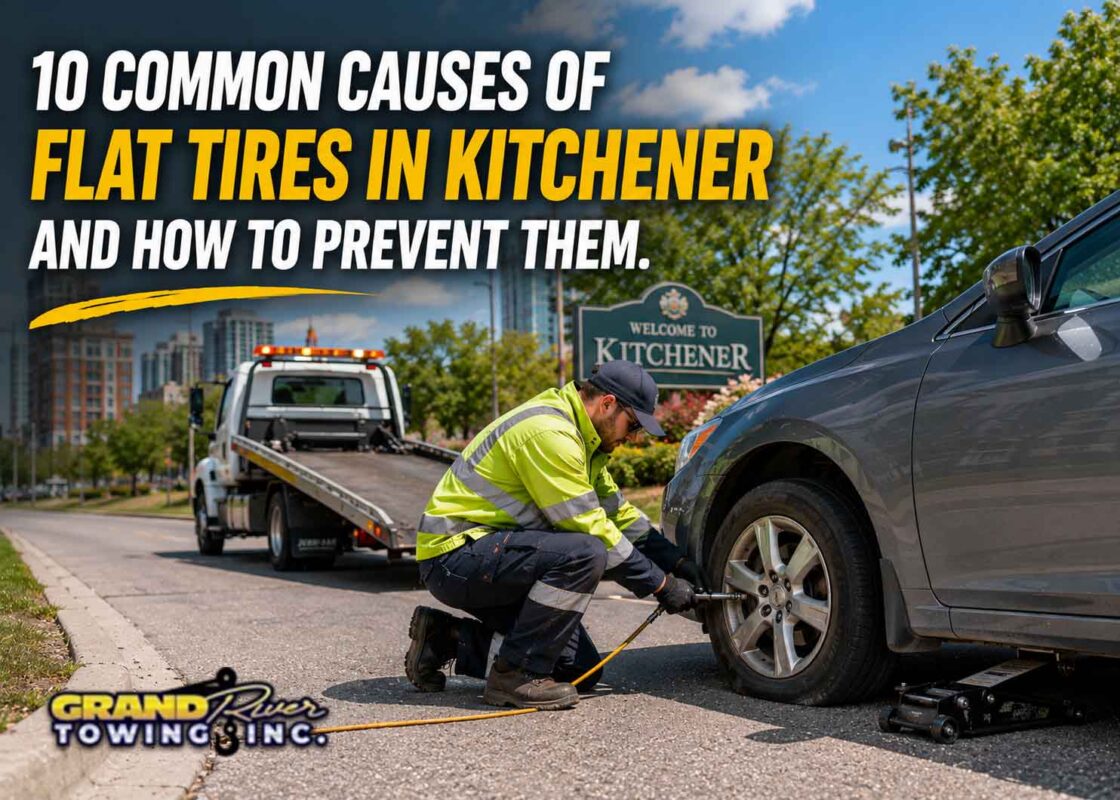
A flat tire can turn a normal drive through Kitchener into an unexpected roadside stop. It may happen while commuting on Highway 8, leaving a parking lot, or driving through a residential construction area.
Some tire failures happen without warning. Many others develop slowly because of low pressure, worn tread, damaged valves, or road impact. Knowing the common causes of flat tires can help you catch problems before your vehicle becomes unsafe to drive.
TL;DR
Most flat tires are caused by punctures, low air pressure, pothole damage, leaking valves, worn tread, or damaged sidewalls. Check your pressure and tire condition every month, avoid overloading the vehicle, and do not keep driving on a damaged tire. For a flat tire in Kitchener, roadside help can install a usable spare or tow the vehicle safely.
Key Takeaways
- Check tire pressure at least once a month and before longer trips.
- Nails and screws can cause either sudden flats or slow air leaks.
- Potholes can damage the tire, wheel, sidewall, or internal structure.
- Cracks, bubbles, exposed cords, and sidewall cuts require attention.
- Driving on a flat tire can turn a repairable puncture into a ruined tire.
- Roadside assistance is useful when the spare is missing, damaged, or difficult to install.
Table of Contents
- Why Flat Tires Happen
- Ten Common Causes of Flat Tires
- How to Prevent a Flat Tire in Kitchener
- What to Do After a Tire Goes Flat
- Tire Repair or Tire Replacement
- Cost of Emergency Tire Assistance
- When to Call for Roadside Tire Assistance
- Frequently Asked Questions
Why Do Flat Tires Happen?
A tire holds pressurized air while supporting the weight of the vehicle. It must also absorb road impact, maintain traction, and handle changes in temperature.
A problem with the tread, sidewall, valve, wheel, or air pressure can cause the tire to lose air. The loss may happen immediately after an impact, or it may continue slowly for several days.
Some drivers notice a warning light first. Others feel pulling, vibration, heavy steering, or a repeated thumping sound. Stop in a safe place as soon as you suspect a tire problem.
10 Common Causes of Flat Tires in Kitchener
1. Nails, Screws, and Sharp Road Debris
Nails and screws are among the most common reasons drivers need tire repair in Kitchener. They are often found near construction areas, industrial properties, loading zones, and road shoulders.
A sharp object may remain inside the tread and allow air to escape slowly. The tire might look normal in the morning but trigger the pressure warning later in the day.
Prevention: Avoid driving through piles of debris and inspect the tread if you have travelled through an active construction area.
2. Potholes and Broken Pavement
Kitchener roads can develop potholes after winter freeze and thaw cycles. Hitting one at speed can pinch the tire between the road and the wheel.
The impact may cut the sidewall, bend the rim, damage internal tire cords, or create a bubble. Some damage appears immediately. Other problems become visible after several days.
Prevention: Reduce speed on damaged roads and leave enough space to see potholes before reaching them. Have the tire inspected after a hard impact, even when it still holds air.
3. Low Tire Pressure
Underinflation causes the tire’s sidewalls to bend more than they should. That extra movement creates heat and places stress on the tire’s internal structure.
Cold weather also reduces tire pressure. A tire that was properly inflated during warmer weather may become underinflated after a major temperature drop.
Prevention: Check all four tires and the spare once a month while they are cold. Use the pressure listed on the vehicle information label, normally found inside the driver’s door frame.
4. Excessive Tire Pressure
Adding too much air is not a safe way to prevent a flat. An overinflated tire has a smaller contact area with the road and may be more vulnerable to impact damage.
It can also cause faster wear in the centre of the tread and affect steering or braking.
Prevention: Follow the vehicle manufacturer’s pressure recommendation. Do not use the maximum pressure printed on the tire sidewall as the normal operating pressure unless the manufacturer specifically requires it.
5. Leaking or Damaged Valve Stems
The valve stem is the small part used to add or release air. Dirt, corrosion, age, physical damage, or a loose valve component can create a slow leak.
A missing valve cap may also allow moisture and debris to collect around the valve.
Prevention: Replace missing caps and ask for the valve stems to be inspected during tire changes. A small valve leak is easier to address before the tire loses enough pressure to leave you stranded.
6. Worn Tire Tread
Tread becomes thinner as a tire ages and collects kilometres. A badly worn tire provides less protection between the road surface and the internal tire structure.
It is more vulnerable to punctures and offers less grip during rain, snow, and slush.
Prevention: Check the tread across several points on each tire. Uneven wear may signal an alignment, balance, suspension, or inflation problem that needs inspection.
7. Sidewall Cuts, Cracks, or Bulges
Sidewall damage may result from striking a curb, hitting a pothole, driving with low pressure, or allowing the tire to deteriorate with age.
A bubble or bulge can indicate damaged internal cords. Sidewall damage is different from a small tread puncture and normally cannot be repaired safely.
Prevention: Look at both the inner and outer sidewalls during regular vehicle checks. Do not drive on a tire with a deep cut, exposed cord, or visible bulge.
8. A Bent, Cracked, or Corroded Wheel
The tire must seal tightly against the wheel. A bent rim or corrosion around the sealing surface can allow air to escape.
This problem is sometimes mistaken for a puncture because the tire repeatedly loses pressure after being filled.
Prevention: Have the wheel inspected when the same tire continues going low but no nail or tread damage is visible. Avoid repeated inflation without finding the source of the leak.
9. Carrying Too Much Weight
Every tire has a load limit. Heavy tools, building materials, equipment, luggage, or cargo can place more weight on the tires than they were designed to support.
Overloading becomes more dangerous when a tire is already underinflated. Heat and sidewall stress rise as the vehicle travels.
Prevention: Follow the vehicle’s load information and distribute cargo properly. Commercial and work vehicles should receive more frequent tire checks because their loads can change from day to day.
10. Old Tires and Material Deterioration
Tires can weaken even when they still have visible tread. Age, heat, sunlight, moisture, storage conditions, and previous damage affect the rubber and internal structure.
Cracking around the sidewall or between tread blocks can signal deterioration.
Prevention: Check the tire manufacturing date and ask a tire professional to assess older tires. The spare also needs inspection, especially if it has remained unused for years.
How Can You Prevent a Flat Tire in Kitchener?
A short monthly inspection prevents many roadside problems. Check the tire pressure while the vehicle has been parked for several hours. Inspect the tread for nails, stones, cuts, uneven wear, and exposed material.
Pay attention to the tire-pressure warning light. Some systems do not alert the driver until pressure has already fallen significantly, so the dashboard light should not replace manual checks.
Rotate the tires according to the vehicle manufacturer’s schedule. Rotation helps keep wear more even and gives the shop another opportunity to find damage.
Keep the spare tire inflated and confirm that the jack, wheel wrench, and locking-wheel-nut key are inside the vehicle. A good spare is not useful when the correct tools are missing.
What Should You Do When a Tire Goes Flat?
Hold the steering wheel firmly and reduce speed gradually. Avoid sudden braking or sharp steering.
Move as far away from traffic as safely possible. Use a parking lot, side street, rest area, or wide shoulder when one is available. Turn on the hazard lights and apply the parking brake.
Do not continue driving in the hope of reaching a nearby shop. Even a short distance can damage the sidewall and wheel.
Check your location before requesting emergency tire service in Kitchener. Share the road name, direction of travel, nearest intersection, vehicle type, and whether you have a usable spare.
Grand River Towing provides flat tire repair service for common roadside situations. The team can assess the problem, install a usable spare, and arrange towing when the vehicle cannot continue safely.
Can the Tire Be Repaired, or Does It Need Replacement?
A small puncture in the main tread area may be repairable after the tire is removed and inspected. The final decision depends on the location, size, condition, and internal damage.
Sidewall punctures, large cuts, exposed cords, bulges, and severe impact damage usually require replacement. A tire may also be unsafe to repair if it was driven while flat.
Roadside service does not replace a full internal inspection. After a temporary spare is installed, visit a qualified tire shop and ask them to examine the damaged tire properly.
Drivers searching for tire repair Kitchener should explain how the damage happened and how far the vehicle travelled after losing pressure. Those details help the shop assess possible internal damage.
How Much Does Emergency Tire Service in Kitchener Cost?
The cost depends on the vehicle’s location, the time of the call, the type of vehicle, the condition of the spare, and whether towing is required.
A basic spare installation is different from a call involving stuck lug nuts, wheel damage, a missing spare, or an unsafe highway location. Towing distance also affects the final amount when the vehicle must be taken to a shop.
Provide accurate information during the first call. This allows the towing company to understand the situation and explain the likely service required.
When Should You Call for Roadside Tire Assistance in Kitchener?
Call for professional assistance when:
- You do not have a spare tire.
- The spare is flat, damaged, or too old to use.
- The lug nuts are stuck or damaged.
- The vehicle is on an unsafe shoulder.
- The wheel or sidewall has visible damage.
- You do not have the proper jack or tools.
- Weather, traffic, or lighting makes the tire change unsafe.
- The vehicle has a locking wheel nut and the key is missing.
- You are unsure whether the vehicle can be driven.
Grand River Towing offers 24 hour roadside assistance across Kitchener, Waterloo, Cambridge, and surrounding communities. Service is available during nights, weekends, and holidays.
Frequently Asked Questions
Can roadside assistance repair my tire at the scene?
Roadside help can assess the situation and may install your usable spare tire. A permanent puncture repair usually requires the damaged tire to be removed and inspected at a tire shop. If no safe spare is available, the vehicle can be towed.
What happens if my car does not have a spare tire?
Many newer vehicles use inflator kits or run-flat tires instead of a spare. If the kit cannot handle the damage or the tire is unsafe to drive on, roadside assistance can arrange transportation to a repair shop.
Can I drive slowly on a completely flat tire?
No. Driving on a flat can damage the tire’s internal structure, sidewall, wheel, and suspension components. Move only when required to leave an immediate traffic hazard, and stop again as soon as it is safe.
How quickly can roadside tire assistance reach me?
Arrival time depends on your location, road conditions, traffic, weather, and current call volume. Give the dispatcher an exact location and explain whether the vehicle is blocking traffic or sitting in a dangerous position.
Is roadside tire assistance available late at night?
Yes. Grand River Towing provides 24/7 roadside and towing support. Drivers can request help at night, early in the morning, on weekends, and during holidays.
Get Help With a Flat Tire in Kitchener
A flat tire does not always need a tow, but it does need to be handled safely. Stop driving, move away from traffic where possible, and check whether you have a usable spare.
For roadside tire assistance in Kitchener, contact Grand River Towing or call +1 (519) 729-0982. The team can assess the situation, install a spare when possible, or tow the vehicle to your preferred repair location.